1. Definition & Core Functions
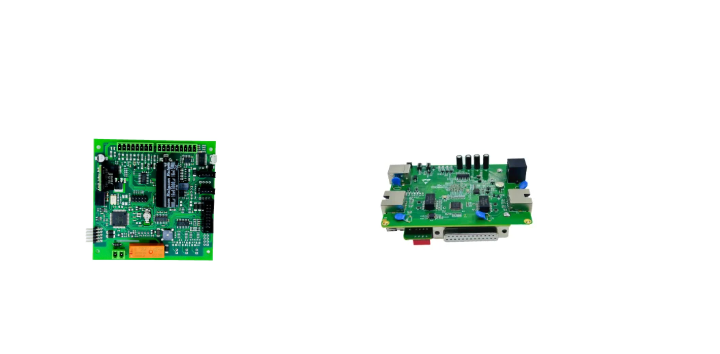
An Industrial Control PCBA (Printed Circuit Board Assembly) is a purpose-built electronic board that gathers data, performs logic processing, and drives motion or power inside harsh industrial environments.
Environmental Threat Mechanical shock & continuous vibration Extreme temperature swings (-40 °C to +85 °C, or wider) High humidity & airborne dust Strong electromagnetic interference (EMI) Design Counter-Measures Reinforced solder joints, anti-vibration SMT adhesives, shock-damping potting Wide-temperature components, metal-core or high-Tg laminates, heat-sink structures Conformal coating, nano-coating, or sealed enclosures to block condensation and particulates Multi-layer shielding, differential routing, controlled-impedance stacks, and solid ground isolation
Because downtime jeopardises safety and profit, plants pair each board with online health monitoring and preventive maintenance routines validated against standards such as IEC 61000 (EMC) and IPC-A-610 (acceptance) for long-term reliability.
2. Structure & Materials 2.1 Layer Stack-Up Multi-layer architecture: 4 / 6 / 8 / 10-layer stacks isolate power, ground, and high-speed traces, lowering loop impedance and boosting electromagnetic compatibility.High-grade substrates: Mainstream FR-4 dominates, but polyimide (PI) or high-Tg hybrids (Tg ≥ 170 °C) are specified where heat or RF demands soar.Heavy-copper areas: Standard copper starts at 1 oz ft²; power buses or relay paths often rise to 2–4 oz ft² with thermal vias for hotspot spreading.Surface & protective finishes: ENIG, ENEPIG, or immersion tin withstand humidity and reflow heat; finished boards receive a conformal coat or nano-film for secondary protection.2.2 Components & Assembly Component selection: MCUs/MPUs, FPGAs, power modules, Hall sensors, and industrial-lock connectors are screened to −40 °C—+85 °C (or wider), plus salt-spray and vibration tests.Hybrid SMT + THT: 01005 passives and high-speed ICs are placed by SMT, while large capacitors, transformers, or high-torque connectors are wave- or selective-soldered.Mechanical reinforcement: Local epoxy dots, staking, potting, or support pillars raise shock resilience.3. Design & Manufacturing Standards Standard / Regulation Key Focus Stage Applied PC-6012 / IPC-2221 Base-material type, width/spacing, stack performance, solderability Material & safety testing Parts sourcing & chemistry UL 94 RoHS /REACH Flammability rating (V-0 / V-1)Limits Pb, Cd, Cr⁶⁺, PBDEs, etc., for global market access System architecture & functional-safety validation IEC 61511 (SIL) Safety-instrumented systems integrity (SIL 1–4) EMC design & compliance IEC61000-6-4EN50155, ISO16750 Generic EMC emission limits for industrial sitesRailway & automotive vibration/temperature/EMC Transport & heavy-machine electronics
4. Manufacturing & Verification Process DFM / DFA review – impedance control, thermal modelling, test-point placement, EMC simulation.Prototype iteration – engineering builds → small-batch pilots, each run closed with accelerated stress tests (thermal cycling, humidity bias, salt-spray, vibration).Full-process quality loop HALT / HASS Mass-production release – PPAP / first-article approval, followed by outgoing-board audits (OBA) for every lot.5. Key Application Domains Domain Representative Equipment Core Requirements & Value Factory automation & robotics PLCs, HMIs, 6-axis robot controllers, servo/step motor drives Millisecond-level motion control; onboard safety interlocks avoid unplanned stops Process control & instrumentation Temperature, flow, pressure transmitters; gas analysers Long-term drift ≤ 0.1 %; galvanic-isolated A/D; intrinsic-safe design Energy & renewables Solar inverters, storage BMS, wind-turbine pitch/yaw controllers Thick-copper heat paths, 15-year life, IEC 62109 compliance Industrial IoT Edge gateways, multi-protocol nodes, wireless beacons Integrated MCU/MPU + 5G / Wi-Fi 6 / LoRa; OTA updates & remote diagnostics Transportation & heavy machinery Train traction/brake PCBs, conveyor sorters, elevator masters, ECU Shock rating up to 20 g; conformal coat vs oil mist; EN 50155 & ISO 16750 certified Industrial networking Modbus, Profibus, EtherCAT, CAN, OPC UA interface cards Hardware time-stamp, isolated transceivers, daisy-chain or ring redundancy
6. Assembly Workflow PCB fabrication – lamination, imaging, CNC drilling, Cu plating, ENIG/ENEPIG, 100 % flying-probe impedance test.Component procurement & IQC – only traceable industrial-grade parts; moisture-sensitive devices pre-baked.SMT & THT soldering – vacuum or N₂ reflow; selective wave for large through-hole pins.Inline inspection & functional test – AOI for solder fillets, AXI for hidden joints, ICT for shorts/opens, FCT under simulated load.Environmental stress & reliability tests – −40↔+85 °C cycling, 85 °C/85 %RH, random vibration, drop shock; parameters must stay within ±5 %.Conformal coating & final assembly – cured boards aged 24–72 h under full load, then packed in ESD-safe packaging.7. Quality Assurance & Documentation Multi-stage inspection: IQC → IPQC → OQC with AQL sampling; each board carries a unique 2-D barcode linking BOM, process parameters, and test results.Reliability testing: 24–72 h burn-in under rated load plus HALT/HASS screens expose marginal solder joints or material fatigue early.Transparent records: Customers may request batch reports, FMEA logs, or 8D corrective actions, all traceable for the life of the product.8. Environmental & Regulatory Focus RoHS / REACH compliance: third-party lab reports confirm < 0.1 % Pb, Cd, Cr⁶⁺, PBDEs.Lead-free soldering: SAC305 or low-Ag alloys with tuned profiles maintain joint strength.Circular materials: low-VOC inks, recyclable glass-fiber laminates, copper recovery channels; carbon-footprint audits per ISO 14064.


发表回复